
You love the ukulele. You can strum your chords. You can sing along.
But then you hear someone play a song all by themselves. No singing. Just the ukulele. The melody and the chords, all at once.
And you think, “How are they doing that?”
That’s called chord melody. You hear the melody, the part you’d normally sing. And underneath it, you hear the chords. Both at the same time.
It’s one of the most beautiful and satisfying ways to play the ukulele. It can feel like a magic trick you’re not in on. But once you understand how it works, it stops feeling like magic.
In this post, I’ll show you the method behind it. We’ll use my simple chord melody ukulele arrangement of “Over the Rainbow” as our example.
Why not just use ukulele tabs?
One way to play chord melody on ukulele is to find tabs online. There are a lot of great arrangements out there.
But tabs have their limits. Sometimes the song you want hasn’t been tabbed out. Or you find a tab, and it’s way too hard to play, so you give up.
The good news? You can make your own simple chord melodies. And they can sound really satisfying.
There are three parts to it: the melody, the chords, and putting it all together.
Part 1: The melody
Chord melody is all about the melody. It’s the part you’d sing. It’s what a listener recognizes. If people can’t hear the melody, they can’t tell what song you’re playing.
Put the melody on the A-string
In chord melody, we want the melody on the bottom A-string – the highest string of the ukulele. That’s the bottom string when you’re holding your ukulele.
Why? Our ears like it when the melody is the highest note. It sits on top and sings out. Then we can use the other strings to play the chords underneath it.
Find the melody with a lead sheet
So where do you find the melody? Most players think you have to figure it out by ear. That’s one way. But it’s not the way I recommend.
My preferred way is to use a lead sheet. A lead sheet tells you the exact melody notes. And it tells you the chords that go with them. No guessing. No figuring it out by ear. No relying on someone else to give you the tab.
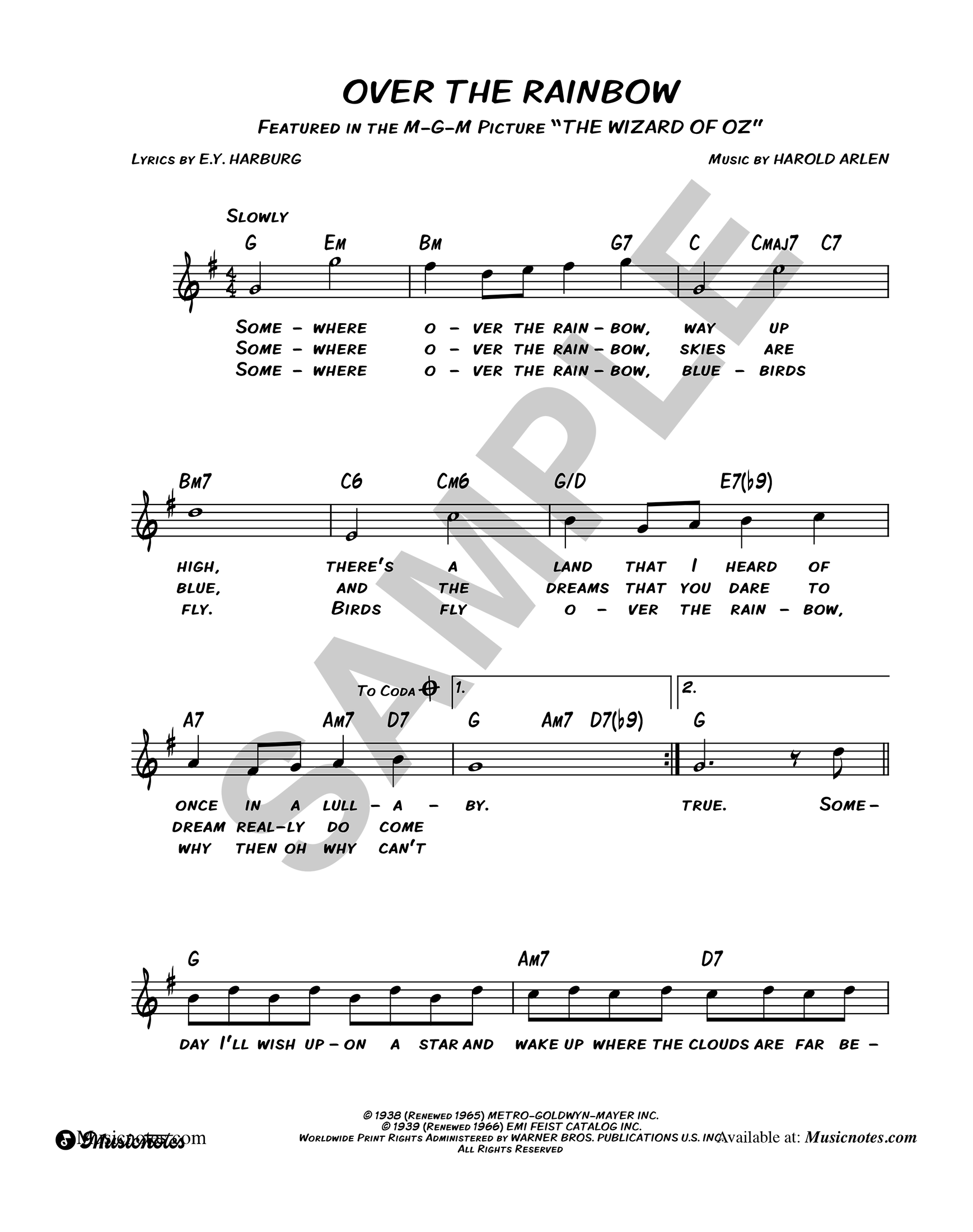
This is how I work as a Signature Artist with MusicNotes.com. It’s how I arranged songs like Adele’s “Easy On Me” and Olivia Rodrigo’s “Drivers License”. Even the songbooks at your local music store can be a gold mine of lead sheets.
Turn the notes on the page into notes on your fretboard
Once you have a lead sheet, you need to know three things:
- The notes on your fretboard
- Your major scales, or how those notes connect with one another
- How the notes on the music staff line up with the notes on your ukulele
This takes some work. But the major scale is the place to start. Check out my free series on the major scale for ukulele.
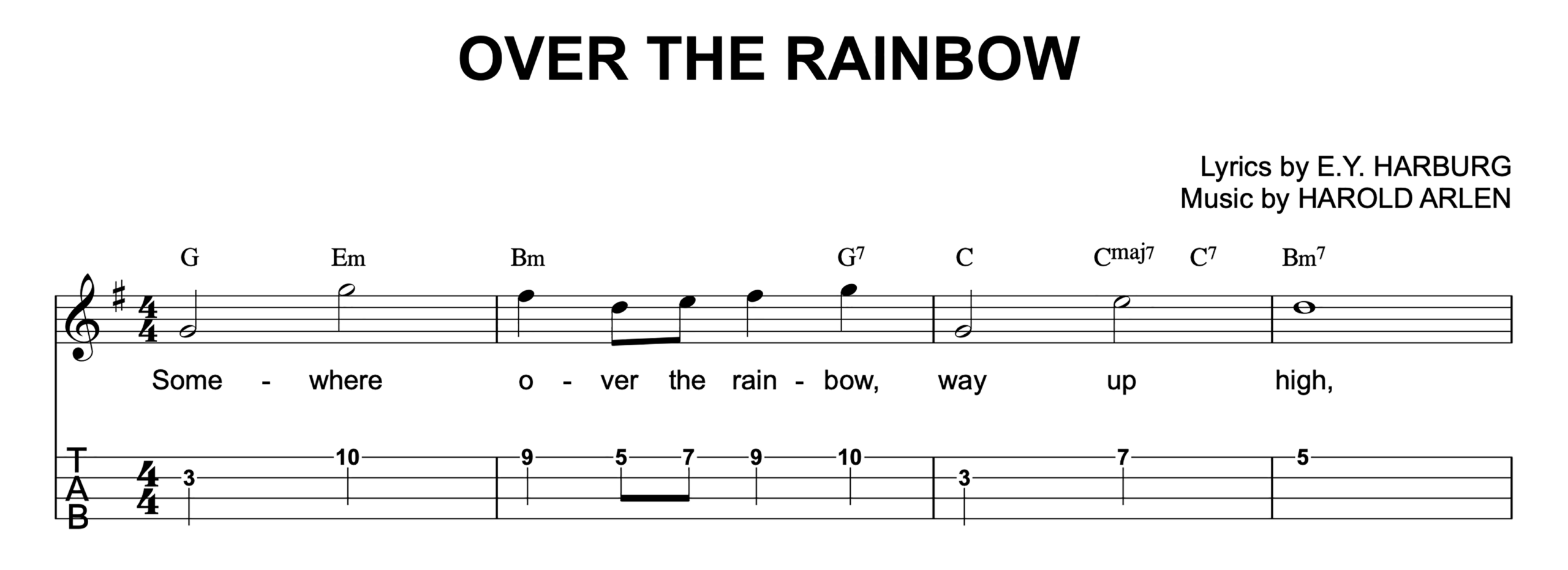
Once you know your scales, you connect the notes on the fretboard to the notes on the staff. You write it down as tab. That’s the whole secret.
There’s also another way. You can arrange a chord melody without reading music and without playing by ear. I show you how in my free 30-minute training called “How to Play & Arrange Chord Melody on Ukulele… Without Needing to Read Music or Play By Ear” which you can watch here.
Part 2: The chords
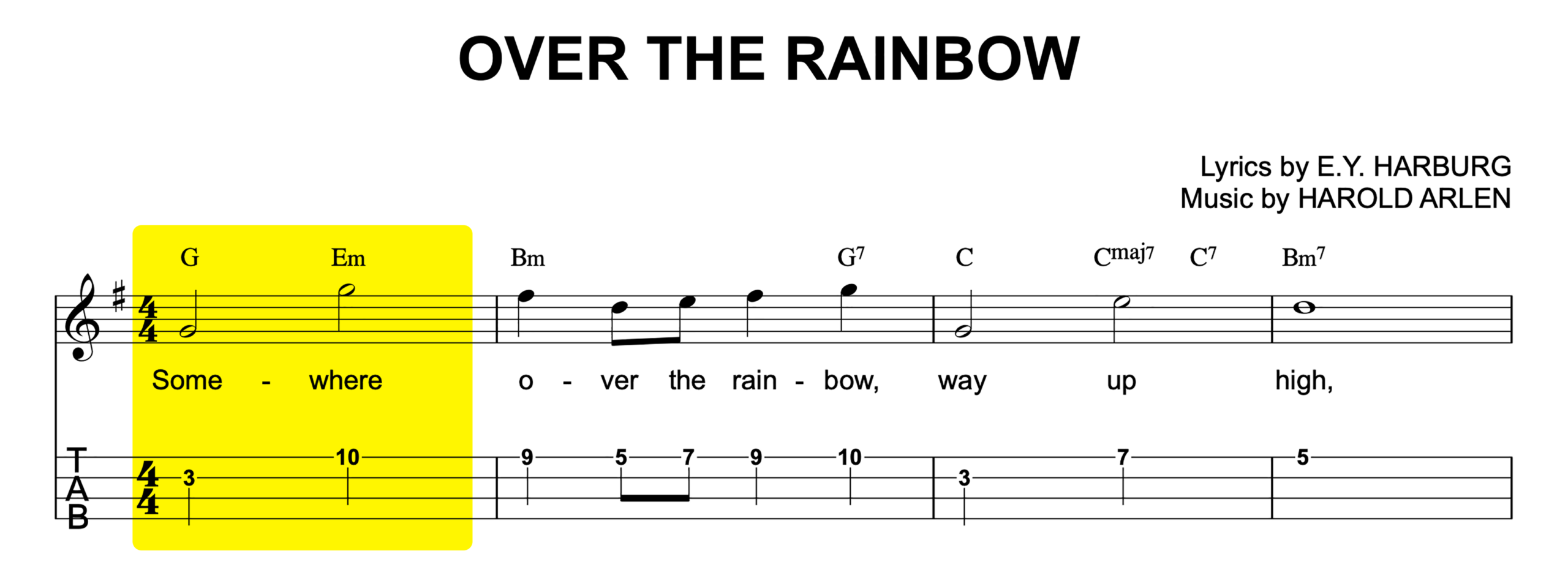
Once you have the melody, you can add chords. Again, the lead sheet tells you which ones. For “Over the Rainbow,” I can see right away that I need a G chord and an E minor chord.
 There’s more than one way to play a chord
Here’s something every ukulele player needs to know. There isn’t just one way to play a chord.
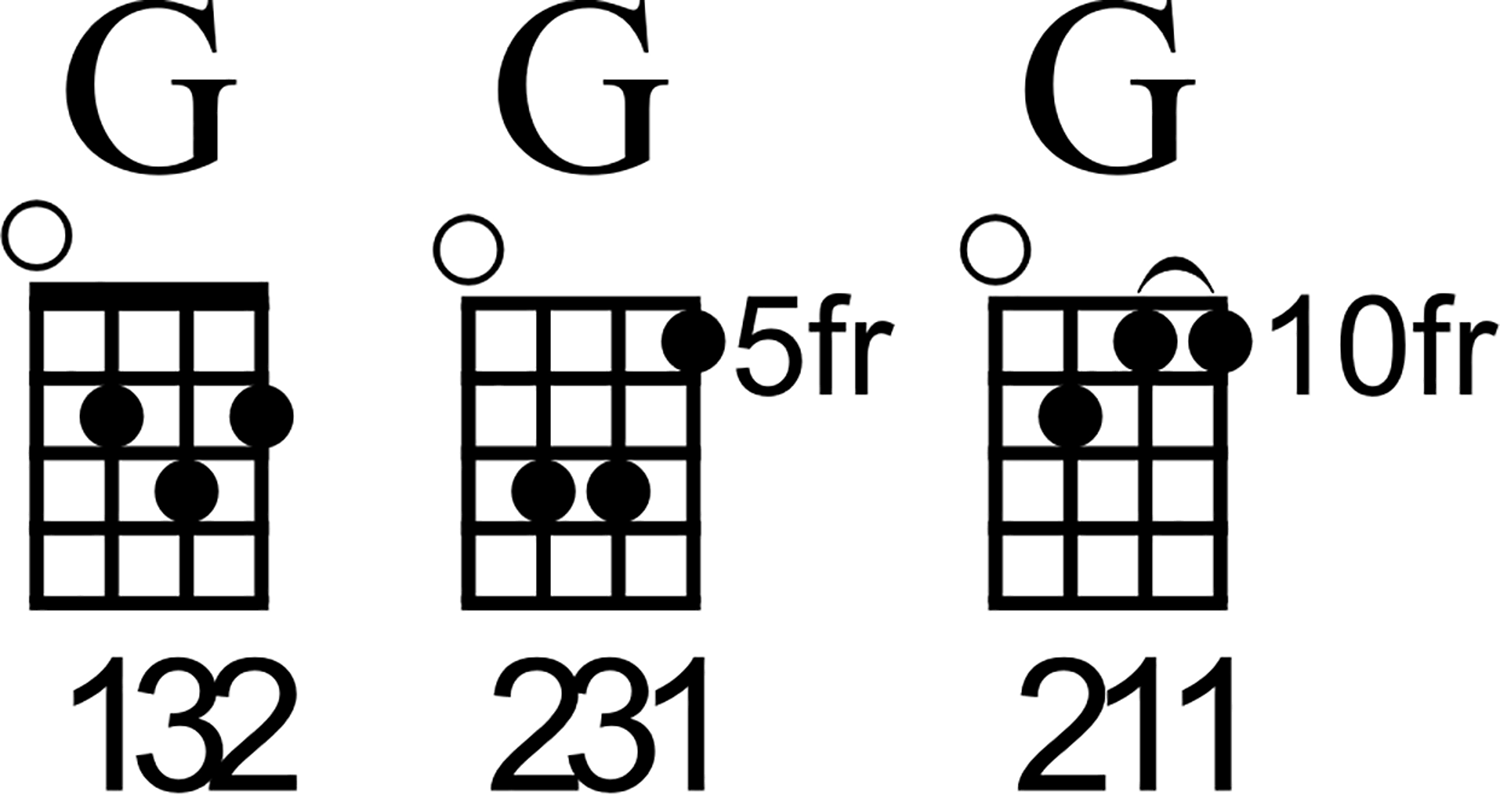
The melody lives on the bottom A-string, and it moves up and down the neck. So you need chords all over the fretboard, not just down by the nut. A G chord, for example, can be played in several different spots on the neck.
Pick the shape that puts the melody on top
Which shape do you use? It depends on where the melody note is. Pick the shape that puts the melody note on top.
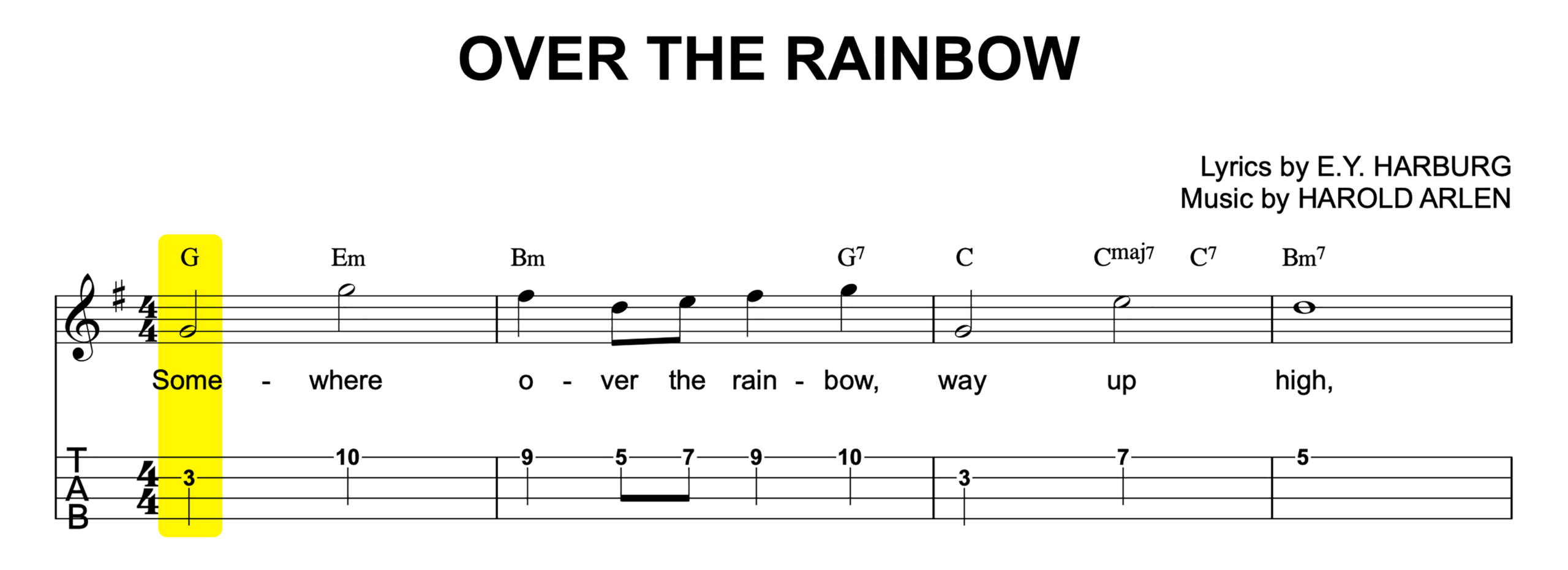
In “Over the Rainbow,” one melody note is a G, on the 3rd fret of the E-string. So I play a regular G chord and leave off the note on the A-string. That lets the melody note on the E-string ring out.
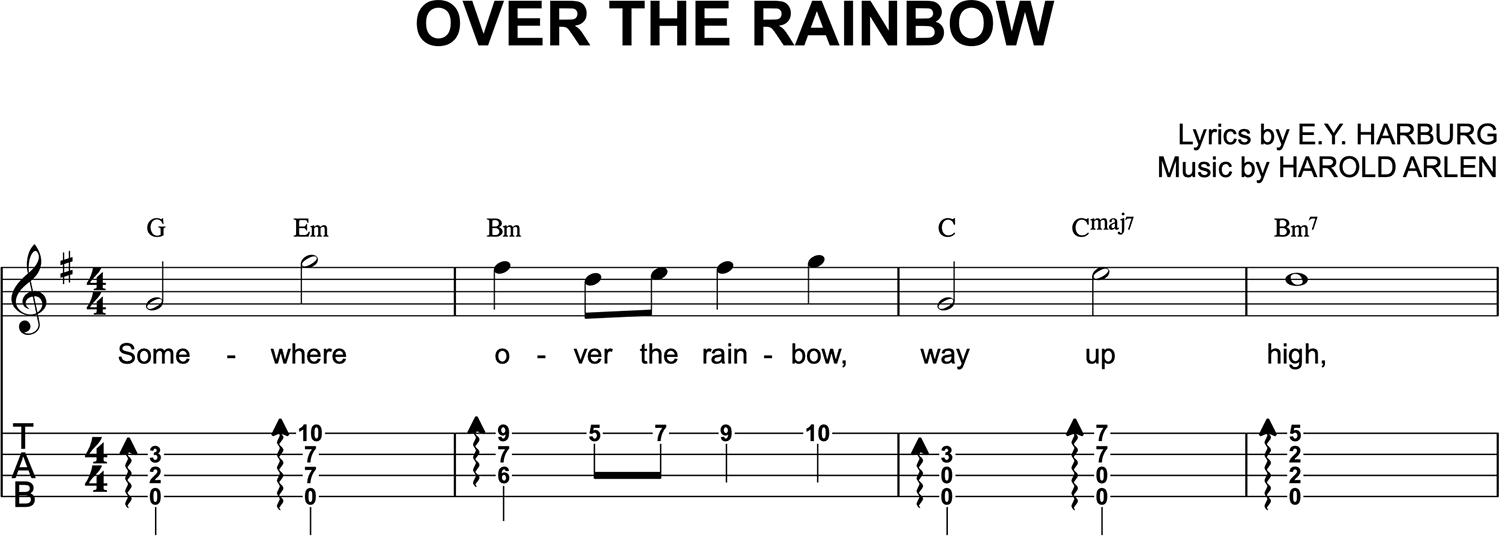
I’ve gone ahead and used my knowledge to fill out the other major and minor chords in the tab.
The skill that makes it work
If you want to find a chord for any melody note, here’s what you need to learn:
- How to build major, minor, diminished, and augmented triads
- How to play them all over the fretboard, in every position (also called inversions)
- How to build seventh chords of all types, from dominant sevenths to minor seventh flat five
That’s no small task. But once you have that skill, it doesn’t matter where your melody note lands. You can always find a chord shape that fits.
This is exactly what I teach you if we work together 1-on-1. Apply to work with me 1-on-1 here.
Part 3: Putting it all together
Now you’ve got the melody. You’ve got chords that fit under it. The last step is playing it.
I use my thumb to pluck and strum through the melody, letting that top note ring out. It’s a really simple technique. And it sounds really satisfying.
One thing that surprises players new to chord melody: it takes longer to learn a chord melody song than a strumming song. You’re playing new chord shapes. Sometimes you’ll have to reach for a note. That means using all four fingers on your fretting hand. Yes, even the pinky.
But you don’t need to be a super advanced player. Work out the melody and chords with your fretting hand. Pluck with your thumb. That’s enough to make a simple arrangement that sounds beautiful.
And here’s a bonus. When you make your own chord melodies, you teach yourself a lot about the ukulele. You’ll discover ways of playing across the fretboard you might never have found otherwise.
Your next steps
Get the “Over the Rainbow” lead sheet. If you want to try your hand at this process, then, I used the lead sheet for “Over the Rainbow” on MusicNotes.com here.
Watch my free chord melody training. In 30 minutes, I’ll show you how to “hack” this whole process, even if you don’t read music and don’t play by ear. Watch the free training here.
Work with me 1-on-1. In my coaching program, I teach you how to arrange and solo your own chord melodies, from your fretboard to triads in every position to seventh chords. Apply to work with me here.
Happy playing!
Brett
Leave a Reply